
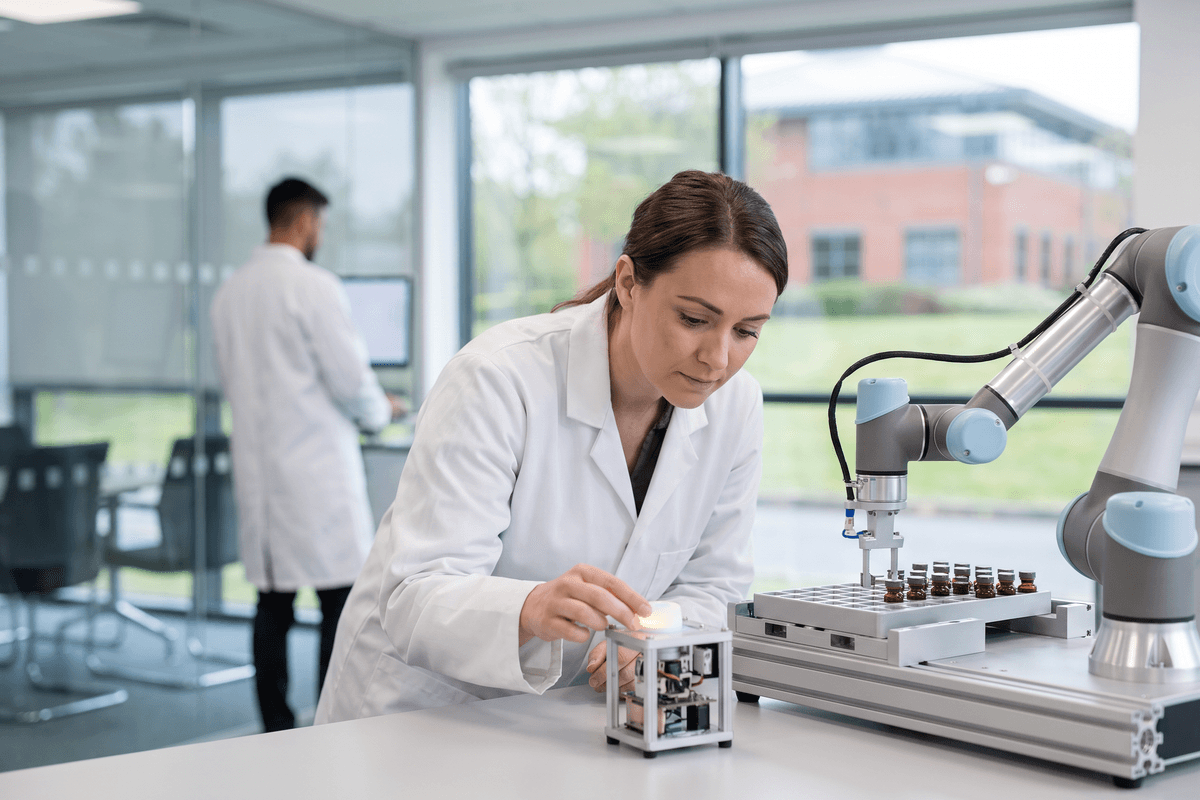



The traditional image of British manufacturing—sparks flying on heavy assembly lines—is rapidly making way for a decidedly more clinical reality. Today, the vanguard of UK engineering is found in sterile environments, where micron-level precision, high-speed robotics, and rigorous regulatory compliance intersect. This evolution has been brought into sharp focus following the announcement that Mechitronic has successfully integrated UK-based Lambert, a move designed to aggressively accelerate its footprint in the pharmaceutical automation and mechatronics sector.
For engineering professionals across the United Kingdom, this integration is more than just another corporate merger. It is a bellwether for a broader industrial shift. As the UK seeks to solidify its position as a global life sciences superpower, the physical infrastructure required to manufacture complex therapeutics, diagnostics, and medical devices is undergoing a radical transformation. Mechatronics—the synergistic integration of mechanical engineering, electronics, and intelligent computer control—is the linchpin of this new era.
The Strategic Value of UK Automation IP
Lambert Engineering has long been recognized as a formidable player in the UK's bespoke automation landscape. By integrating Lambert, Mechitronic is not merely acquiring a client list; it is absorbing decades of localized, high-value intellectual property and systems integration expertise. This move strategically positions the newly fortified entity to tackle the notoriously high barriers to entry within the pharmaceutical sector.
The pharmaceutical industry demands an unprecedented level of reliability. A single mechanical fault or software glitch on a high-speed vial-filling line can result in millions of pounds in wasted product, or worse, a compromised batch reaching patients. Consequently, pharma manufacturers are moving away from piecemeal equipment procurement in favor of holistic, integrated mechatronic systems.
"The integration of mechanical design with advanced control logic is no longer a luxury in pharmaceutical manufacturing; it is a baseline regulatory requirement. Firms that can offer end-to-end, validated mechatronic solutions are the ones that will dominate the next decade of life sciences engineering."
Why Pharmaceuticals? The Drive for Domestic Resilience
The pivot toward pharmaceutical automation is driven by macro-economic and geopolitical factors. The post-pandemic landscape exposed critical vulnerabilities in global medical supply chains. In response, the UK government's Life Sciences Vision has placed a premium on domestic manufacturing capability. However, onshoring production in a high-wage economy like the UK is only commercially viable through aggressive, intelligent automation.
This is where Mechitronic’s accelerated focus pays dividends. By leveraging Lambert's UK-based engineering talent, the company can offer localized support, rapid prototyping, and bespoke machine building that aligns with the stringent requirements of the Medicines and Healthcare products Regulatory Agency (MHRA) and the US Food and Drug Administration (FDA).
The Technical Demands of Pharma Mechatronics
For UK engineers transitioning from general manufacturing to pharmaceutical automation, the technical paradigm shifts significantly. The focus moves from pure throughput and raw power to traceability, cleanability, and validation.
- Sterile Design and Washdown Compliance: Equipment must be designed with minimal crevices, utilizing 316L stainless steel and FDA-approved polymers. Actuators and robotic arms must withstand aggressive chemical washdowns (CIP/SIP processes) without degrading.
- High-Speed Vision Systems: Mechatronic lines in pharma rely heavily on integrated machine vision. These systems must inspect blister packs, verify label placement, and check for particulate contamination in clear liquids at speeds exceeding 600 units per minute.
- Data Integrity and Traceability: Under regulations like FDA 21 CFR Part 11, every action taken by the automated system must be logged in a secure audit trail. The electronic control systems must be as robust as the mechanical components.
- Micro-Handling: The rise of personalized medicine and complex biologics requires mechatronic systems capable of handling highly fragile, small-batch components with delicate, force-feedback robotic end-effectors.
Comparing the Engineering Paradigms
To understand the leap required to engineer solutions for the pharmaceutical sector, it is helpful to contrast it with traditional high-volume manufacturing (such as FMCG or automotive components).
| Engineering Metric | Traditional Manufacturing Automation | Pharmaceutical Mechatronics |
|---|---|---|
| Primary Objective | Maximum throughput and uptime | Zero-defect output and strict compliance |
| Validation Process | Standard Factory Acceptance Testing (FAT) | Rigorous DQ, IQ, OQ, PQ (GAMP 5 standards) |
| Environmental Constraints | Standard factory floor environments | ISO-rated cleanrooms, positive pressure, HEPA filtration |
| Material Handling | Robust gripping, impact tolerance | Force-monitored handling, non-particulating surfaces |
| Data Integration | Basic SCADA monitoring | Full serialization, immutable audit trails, IIoT connectivity |
Implications for the UK Engineering Workforce
The consolidation of firms like Lambert into larger, mechatronics-focused entities like Mechitronic signals a pressing need for a shift in the UK's engineering skills base. The siloed approach—where mechanical engineers design the frame, electrical engineers wire the panel, and software engineers write the PLC code—is becoming obsolete.
The Rise of the Systems Thinker
Modern pharmaceutical automation requires "systems thinkers." Engineers must understand how a micro-vibration in a servo motor will affect the resolution of a high-speed camera, or how the thermal expansion of a mechanical track might impact the calibration of a laser-guided robotic arm. Furthermore, these engineers must be fluent in the language of regulatory compliance. An elegantly designed machine is useless in the pharma sector if its control logic cannot be validated to GAMP 5 standards.
For UK engineering firms looking to capture market share in the life sciences boom, investment in cross-disciplinary training is non-negotiable. Partnerships with universities to develop specialized mechatronics modules—focusing heavily on robotics, machine vision, and regulatory frameworks—will be essential to feed the talent pipeline.
Conclusion: A Blueprint for High-Value Growth
Mechitronic’s integration of Lambert is a powerful indicator of where the highest margins and most resilient growth opportunities lie for UK engineering. By pivoting aggressively toward pharmaceutical mechatronics, the combined entity is aligning itself with a sector that is inherently recession-resistant and critical to national infrastructure.
As the UK continues to transition from legacy industrial manufacturing to high-tech, precision engineering, the pharmaceutical floor will increasingly become the ultimate proving ground. For the professionals and firms willing to embrace the rigorous demands of mechatronics, machine vision, and sterile automation, the prognosis for growth is exceptionally strong. The blueprint has been laid out; the challenge now is scaling the talent and innovation required to execute it.