



For UK engineering professionals, the modern mega-project is a tale of two distinct, yet deeply intertwined, battlegrounds: the boardroom and the worksite. Before a single cubic metre of concrete is poured, projects must survive the labyrinthine UK planning system. Once approved, the challenge abruptly shifts to executing monumental physical feats without paralyzing the nation's existing infrastructure. As the UK races to upgrade its energy grid and overhaul its transport networks, mastering this lifecycle—from statutory consents to high-stakes logistical execution—has become the ultimate test of engineering capability.
The Front-End Bottleneck: Mastering Planning and Consents
The UK's transition to a net-zero economy requires an unprecedented volume of new infrastructure, particularly in the energy sector. However, the engineering industry has increasingly recognized that technical design is only half the battle; navigating the Development Consent Order (DCO) process and securing statutory approvals often dictates a project's viability.
Underscoring the critical nature of this front-end phase, WSP has recently appointed Alex Herbert as major projects director within its planning and consents business. This strategic move is designed to support the surging demand for major infrastructure planning, with a specific focus on the UK energy sector. As grid reinforcements, offshore wind connections, and new nuclear facilities enter the pipeline, consultancies are scaling their advisory arms to preemptively solve planning hurdles that could otherwise stall billions of pounds in investment.
"The appointment of dedicated major projects directors for planning and consents highlights a paradigm shift in UK engineering: statutory approval is no longer viewed as an administrative hurdle, but as a core engineering discipline that requires strategic, multidisciplinary leadership from day one."
For engineers, this means that early-stage design must be inextricably linked to environmental impact assessments, stakeholder engagement, and regulatory compliance. A design that is technically flawless but fails to account for local ecological sensitivities or visual impact constraints will ultimately fail at the planning hurdle.
High-Stakes Execution: HS2's Summer of Complex Logistics
While teams like WSP's navigate the bureaucratic complexities of project inception, execution teams on the ground face the daunting reality of building these mega-structures within the constraints of a densely populated island. A prime example of this complex execution phase is unfolding in the West Midlands.
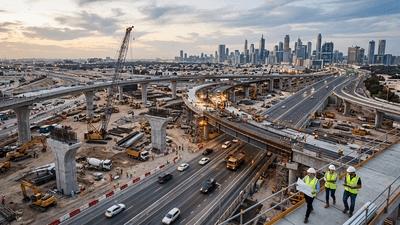
As reported recently, HS2 is preparing for a vast programme of work across the summer, which involves the construction of three large structures over the M42 and M6 motorways. This is not merely a construction milestone; it is a masterclass in logistical precision. The project requires the installation of twin-track viaducts and a complex twin box structure, all while maintaining the flow of traffic on two of the UK's most critical arterial routes.
Minimising the National Impact
The engineering strategy for the M42 and M6 crossings relies heavily on off-site manufacturing and rapid installation techniques. To minimise disruption, contractors are utilizing narrow "possession windows"—brief periods, often overnight or during weekends, where sections of the motorway are closed to allow for heavy lifting operations.
This approach requires exhaustive digital rehearsals. Engineers use 4D Building Information Modelling (BIM) to simulate the movement of Self-Propelled Modular Transporters (SPMTs) and heavy-lift cranes down to the minute. If the planning and consents phase is about securing the right to build, the execution phase over live motorways is about proving the industry's competence to do so without crippling the local economy.
Comparing the Mega-Project Battlegrounds
To understand the dual demands placed on today's major contractors, it is helpful to contrast the front-end and back-end phases of these infrastructure projects:
| Project Phase | Primary Challenge | Core Engineering Focus | Key Success Metric |
|---|---|---|---|
| Planning & Consents | Navigating DCOs and statutory approvals | Environmental integration, stakeholder mitigation, route optioneering | Securing legal authority to build without costly judicial reviews |
| Complex Execution | Building over live infrastructure (e.g., M42/M6) | Off-site manufacturing, heavy lifting, possession management | Zero safety incidents and minimal disruption to public transport networks |
Practical Implications for UK Engineering Professionals
The juxtaposition of WSP's strategic planning appointments and HS2's physical motorway milestones offers several critical takeaways for engineering professionals operating in the UK market:
- Embrace Early Contractor Involvement (ECI): The lessons learned from complex installations over the M6 must be fed back into the planning stages of future energy and transport projects. ECI ensures that the designs submitted for statutory consent are actually buildable within strict logistical constraints.
- Develop Hybrid Skillsets: The industry is moving away from siloed expertise. Structural engineers must understand the basics of the DCO process, while planning consultants must grasp the physical realities of moving a 1,000-tonne viaduct span. Cross-disciplinary literacy is becoming a premium asset.
- Prioritise Digital Rehearsals: The margin for error during a motorway possession is effectively zero. Proficiency in 4D planning and digital twin technology is no longer optional; it is the fundamental mechanism by which contractors guarantee to clients and the public that disruption will be kept to an absolute minimum.
The Road Ahead
As the UK pushes forward with its ambitious infrastructure agenda, the pressure on the engineering sector will only intensify. The expansion of the energy grid to support renewables will require hundreds of complex planning applications, while the physical delivery of these networks will demand unprecedented logistical coordination across live environments.
Whether it is a director in a boardroom securing the vital consents for a new energy corridor, or a site engineer overseeing the midnight installation of a viaduct over the M6, the underlying mandate remains the same: deliver national progress with precision, foresight, and minimal disruption. By mastering both ends of the mega-project matrix, the UK engineering sector can ensure it not only meets the demands of the present but lays a resilient foundation for the future.