
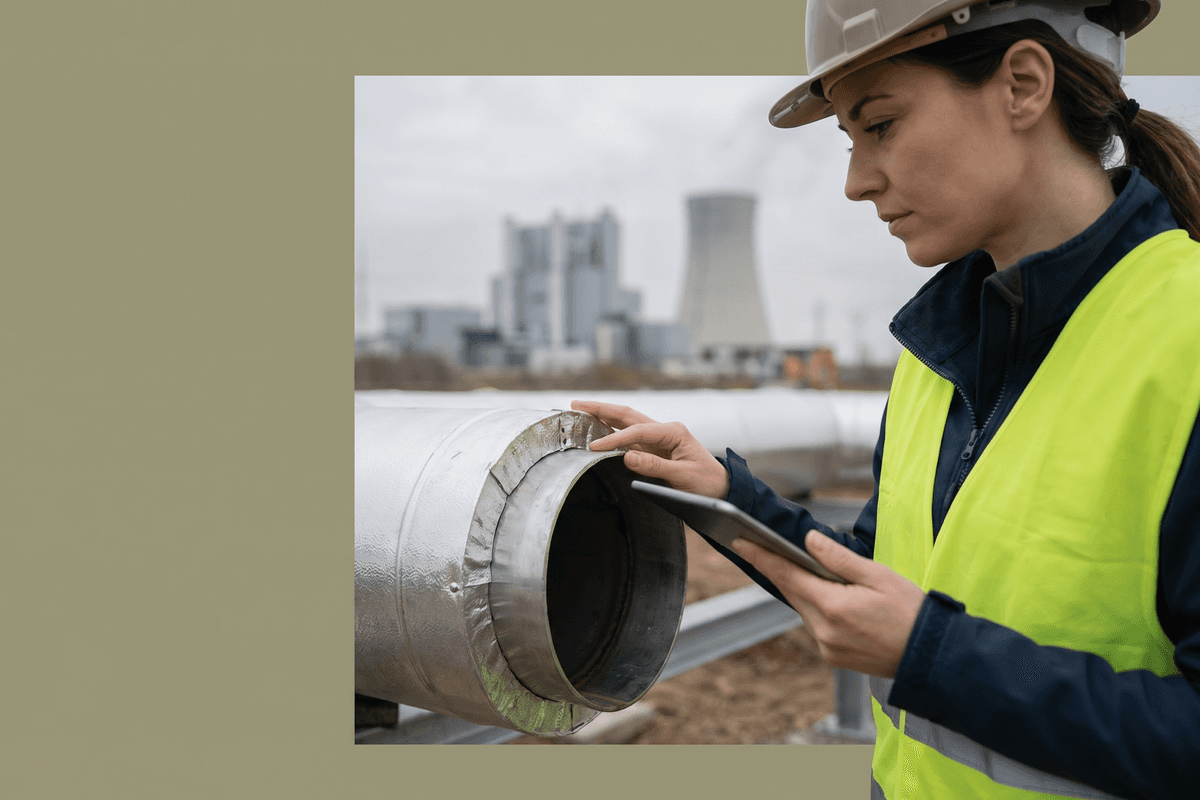



For years, the United Kingdom’s net-zero strategy has been dominated by policy whitepapers, conceptual frameworks, and funding debates. Today, those frameworks are being forged into cold, hard steel. As the industry transitions from the drawing board to the construction site, two distinct but highly complementary sectors—Carbon Capture and Storage (CCS) and nuclear power—are signaling that the UK has officially entered the "execution era" of industrial decarbonization.
This shift is most evident in recent procurement and leadership milestones. The advancement of the Teesside Carbon Capture and Storage (CCS) project through a critical pipework engineering deal represents a tangible leap forward for the East Coast Cluster. Simultaneously, major engineering consultancies are restructuring their upper echelons to manage the impending nuclear renaissance, highlighted by Aecom’s appointment of a new head for its nuclear sector across Europe and India. Together, these developments offer a clear blueprint of where UK engineering capital, talent, and supply chain capacity will be directed over the next decade.
The Teesside CCS Milestone: From Ambition to Anatomy
The Teesside CCS project is the linchpin of the UK's strategy to decarbonize heavy industry. However, capturing carbon is only half the battle; transporting it safely and efficiently to offshore storage sites requires an unprecedented logistical and engineering feat. The newly secured pipework deal is not merely a procurement update—it is the mobilization of the project's literal arteries.
The Technical Rigor of CCS Pipework
Designing and installing pipework for supercritical carbon dioxide (CO2) is vastly different from traditional oil and gas pipelines. Engineering professionals involved in the Teesside cluster are navigating a unique set of metallurgical and thermodynamic challenges:
- Phase Management: CO2 must be transported in a dense, supercritical state to maximize volume. This requires maintaining specific high-pressure and low-temperature parameters throughout the pipeline network, demanding advanced thermal insulation and pressure regulation systems.
- Fracture Propagation: Supercritical CO2 pipelines are highly susceptible to running ductile fractures. If a breach occurs, the rapid depressurization causes the CO2 to cool instantly, potentially embrittling the steel and allowing the fracture to travel for kilometers. Engineers must specify high-toughness steel and install specialized crack arrestors.
- Corrosion Control: While pure CO2 is relatively benign, the introduction of even trace amounts of moisture creates carbonic acid, which is highly corrosive to standard carbon steel. The supply chain must pivot toward specialized alloys and rigorous dehydration processing facilities.
"The Teesside pipework contract is a watershed moment. It proves that the UK supply chain is ready to pivot its legacy oil and gas expertise toward the stringent, zero-defect requirements of carbon transport."
Strategic Leadership in High-Stakes Energy: The Nuclear Equation
While CCS addresses the emissions of existing heavy industry, the UK’s future baseload power relies heavily on a revitalized nuclear sector. The engineering demands of new nuclear—whether gigawatt-scale plants like Hinkley Point C or the forthcoming fleet of Small Modular Reactors (SMRs)—require a level of cross-border coordination and regulatory navigation that is reshaping corporate structures.
Aecom’s strategic decision to appoint a unified head of its nuclear sector for Europe and India underscores the globalized nature of modern nuclear engineering. For UK professionals, this signals a critical trend: the siloing of regional engineering talent is ending. The UK is positioning itself as a central node in an international nuclear supply chain.
Why Cross-Border Leadership Matters
The challenges facing the UK nuclear sector are not unique; they are shared globally. By consolidating leadership across Europe and India, engineering giants are aiming to achieve several strategic advantages that will directly impact UK operations:
- Standardization of Design: Moving away from bespoke, first-of-a-kind reactor designs toward standardized models that can be deployed across multiple regulatory environments.
- Resource Mobility: The ability to fluidly move highly specialized nuclear safety engineers, seismic analysts, and project managers between the UK, European, and Asian markets to mitigate regional skills shortages.
- Supply Chain Leverage: Aggregating procurement demands for critical components, such as reactor pressure vessels and high-grade forgings, which suffer from global manufacturing bottlenecks.
The Shared DNA of CCS and Nuclear Engineering
At first glance, laying pipework in Teesside and managing international nuclear portfolios may seem distinct. However, for the UK engineering sector, they represent two sides of the same "Zero-Defect" coin. Both sectors operate under extreme public scrutiny, require massive upfront capital, and deal with hazardous materials that demand uncompromising safety cultures.
To understand the dual demands being placed on the UK engineering workforce, we can compare the core drivers of both sectors:
| Engineering Metric | Teesside CCS (Carbon Transport) | New Nuclear (SMRs & Gigawatt) |
|---|---|---|
| Primary Technical Challenge | Supercritical fluid dynamics and fracture arrest. | Seismic qualification and radiological containment. |
| Supply Chain Focus | High-toughness metallurgy, precision welding, NDT. | Heavy forgings, modular construction, advanced concrete. |
| Regulatory Environment | Evolving frameworks (Health and Safety Executive). | Highly established, rigid (Office for Nuclear Regulation). |
| Workforce Requirement | Transitioning legacy oil & gas workers to green tech. | Scaling highly specialized, security-cleared nuclear talent. |
Conclusion: Building the Blueprint
The UK engineering sector is currently operating in a crucible of transformation. The pipework being procured for Teesside will serve as a physical proof-of-concept for industrial decarbonization globally. Meanwhile, the restructuring of leadership in the nuclear sector by firms like Aecom ensures that the UK remains at the strategic helm of the global energy transition.
For engineering professionals, contractors, and supply chain managers, the message is clear: the era of theoretical net-zero planning is over. The contracts are being signed, the leadership is in place, and the physical execution of the UK's new energy infrastructure has officially begun. Those who can adapt their expertise to meet the exacting, zero-defect standards of these mega-projects will not only secure their place in the UK market but will help write the blueprint for the global energy transition.