
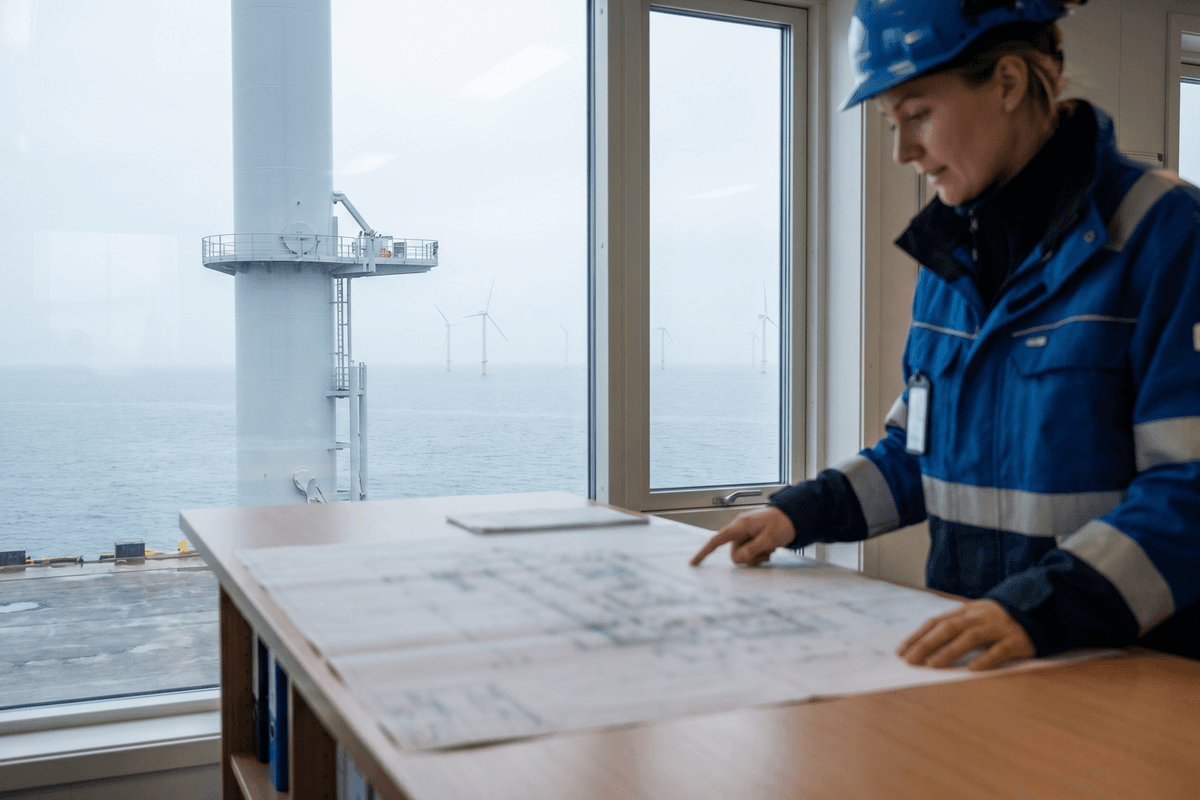



The North Sea has long been touted as the United Kingdom’s greatest modern energy asset—a blustery, shallow expanse capable of powering the nation’s net-zero ambitions. Yet, despite holding some of the most aggressive deployment targets in the world, the UK's offshore wind sector is navigating increasingly turbulent waters. Supply chain friction, glacial planning consents, and grid integration delays threaten to stall the deployment of next-generation turbines. Now, the engineering community is sounding the alarm, warning that without urgent legislative action, the UK risks squandering its sovereign engineering advantage.
This week, researchers from the University of Southampton Marine and Maritime Institute issued a stark directive to Parliament: accelerate offshore wind production or face a compounding energy and economic crisis. Their intervention underscores a critical reality—the barriers to scaling UK offshore wind are no longer strictly technological; they are bureaucratic and infrastructural. For marine, civil, and electrical engineers across the country, this political hesitation directly impacts project pipelines, resource allocation, and the scaling of crucial innovations.
The Southampton Imperative: Bridging the Policy-Execution Gap
The University of Southampton’s Marine and Maritime Institute is at the forefront of ocean engineering, hydrodynamics, and structural mechanics. When its researchers urge MPs to move faster, it is not merely an environmental plea; it is an engineering reality check. The UK has set a monumental target to quadruple offshore wind capacity, but the current run-rate of "steel in the water" is lagging significantly behind the required trajectory.
"We possess the maritime engineering pedigree and the offshore environment to dominate the global wind sector, but our deployment mechanisms are anchored in the past. To capitalise on our technical capabilities, we need policy that moves at the speed of innovation, not the speed of bureaucracy."
For engineering contractors, the primary frustrations lie in the statutory consent processes and the notorious grid connection queue. Currently, an offshore wind farm can take upwards of a decade from initial leasing to commercial operation, with the bulk of that time consumed by environmental assessments, planning inquiries, and waiting for National Grid upgrades. The Southampton researchers are urging MPs to mandate a more agile, parallel-processing approach to project approvals.
Engineering the Deep: The Shift to Floating Wind
As the shallow waters of the North Sea become increasingly crowded, the next frontier for UK offshore wind lies in the Celtic Sea and the deeper waters off the coast of Scotland. This geographical shift necessitates a fundamental engineering pivot: the transition from fixed-bottom monopiles to Floating Offshore Wind (FLOW).
FLOW represents a paradigm shift in marine engineering. Instead of driving steel into the seabed, massive turbines—capable of generating 15MW to 18MW—are mounted on buoyant substructures and tethered to the ocean floor using complex mooring systems. This unlocks vast areas of high-wind real estate but introduces severe technical challenges that require robust supply chains to solve.
Key Engineering Challenges in Floating Wind
- Dynamic Cable Fatigue: Unlike fixed turbines, floating structures move with the waves. The high-voltage export cables connecting the turbine to the subsea grid must withstand continuous dynamic stress, requiring novel polymer materials and advanced fatigue-modelling software.
- Mooring and Anchoring Systems: Depending on the seabed geology, engineers must deploy drag embedment anchors, suction piles, or drilled anchors. The mooring lines themselves are shifting from traditional steel chains to advanced synthetic ropes to reduce weight and improve damping capabilities.
- Substructure Manufacturing at Scale: Whether utilising semi-submersible, spar-buoy, or tension-leg platforms, manufacturing these massive steel or concrete structures requires industrial scaling previously seen only in shipbuilding or offshore oil and gas.
The Ashore Dilemma: Ports and Grid Infrastructure
While the Southampton researchers highlight the need to accelerate deployment at sea, the most severe bottlenecks arguably exist on land. The physical dimensions of modern offshore wind components have outgrown the UK's legacy maritime infrastructure.
Port Infrastructure Upgrades
A single 15MW turbine blade can exceed 115 metres in length. The nacelles weigh hundreds of tonnes. To assemble, store, and load out these behemoths, ports require deep-water quays, reinforced heavy-lift laydown areas, and massive dry docks for floating substructure assembly. Currently, very few UK ports possess this capability, forcing developers to look to mainland Europe for staging areas, which bleeds economic value and engineering jobs away from the UK.
The Grid Bottleneck
Generating gigawatts of power in the Celtic Sea is futile if the onshore transmission network cannot absorb it. Electrical engineers are currently grappling with a grid designed for centralized, fossil-fuel generation, not distributed, intermittent offshore power. Upgrading the grid requires new subsea high-voltage direct current (HVDC) interconnectors, massive onshore converter stations, and reinforced overhead lines—all of which face their own intense planning battles.
| Infrastructure Metric | Legacy Offshore Wind (pre-2015) | Next-Generation Offshore Wind (2025+) |
|---|---|---|
| Turbine Capacity | 3MW - 7MW | 15MW - 20MW+ |
| Foundation Type | Shallow Monopile / Jacket (Fixed) | Deepwater Floating Substructures (FLOW) |
| Port Draft Requirements | 8 - 10 metres | 12 - 15+ metres (for floating assembly) |
| Grid Integration | Point-to-point HVAC | Multi-terminal HVDC / Offshore Grid Networks |
An Actionable Roadmap for the Sector
The call to action from the University of Southampton serves as a blueprint for what the UK engineering sector needs from its policymakers. To unblock the pipeline and unleash the sector's potential, several critical alignments must occur:
- Streamlined Consenting Regimes: MPs must back legislation that reduces the bureaucratic loop for offshore environmental assessments, allowing engineering design and planning approvals to occur concurrently rather than sequentially.
- Strategic Port Investment: The government must co-invest with private enterprise to rapidly upgrade strategically located ports (such as those in the Celtic Sea and Scotland) to handle heavy-lift, deep-draft floating wind components.
- Anticipatory Grid Investment: Regulatory frameworks must be reformed to allow National Grid and transmission operators to build infrastructure ahead of confirmed generation, rather than waiting for wind farms to be fully consented before breaking ground on the pylons and substations needed to support them.
Conclusion: A Closing Window of Opportunity
The UK stands at a critical juncture in its energy transition. The engineering expertise required to dominate the next era of offshore wind—characterised by floating structures, HVDC transmission, and automated maritime operations—already exists within our universities, design consultancies, and manufacturing hubs. The warning from the University of Southampton Marine and Maritime Institute is clear: technical capability is not enough.
If MPs fail to act on these urgent recommendations, the UK will not only miss its decarbonisation targets but will also cede its first-mover advantage in the lucrative global floating wind market. For the engineering sector, the message is equally clear: we must continue to push the boundaries of maritime innovation while actively lobbying for the infrastructural and policy foundations required to build it. The wind is there; we just need the political will to catch it.